


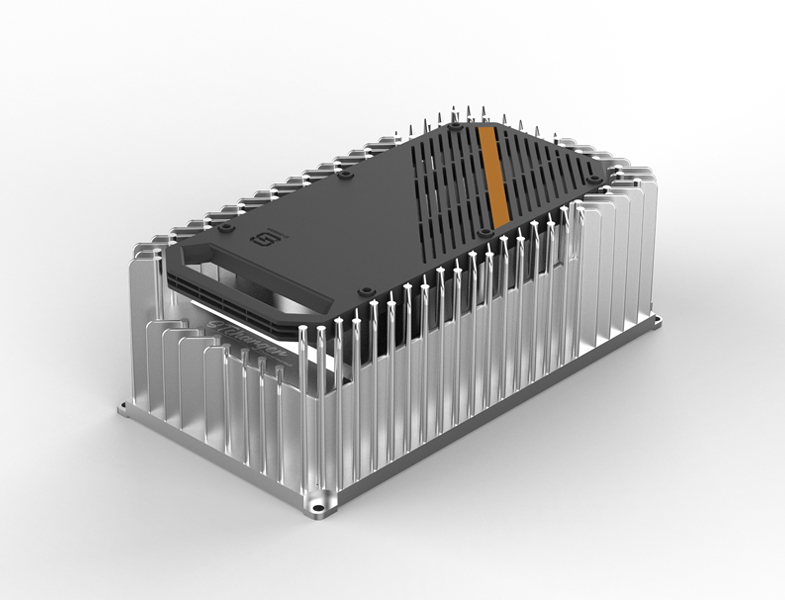
Electric mini excavators require charging systems tailored to their battery specifications, power demands, installation space, and working environments. For OEMs, custom charger development helps align electrical performance with machine requirements and reduce integration issues before production.
What Charging Architectures Suit Electric Mini Excavators?
Onboard AC Charging
Onboard AC chargers convert incoming AC power into DC power for the battery. Their integrated design simplifies charging, but installation space and heat dissipation can limit available power.
ST Charger’s on-board charging solutions provide a reference for compact charger integration. OEMs requiring higher power or specific electrical configurations should evaluate battery limits, cooling requirements, and installation constraints before selecting a suitable solution.
Offboard Charging Options
Offboard chargers are installed outside the excavator, reducing onboard space requirements. AC or DC charging may suit different applications depending on the battery, available power supply, and required charging time.
The choice should reflect the machine’s operating schedule, charging infrastructure, and battery compatibility.
Battery Compatibility Requirements
Charger specifications must match the battery’s voltage range, maximum charging voltage, current limits, and chemistry. OEMs should also confirm battery management system (BMS) communication protocols and fault-handling requirements before finalizing the design.
How Can OEMs Develop Custom High-Power Charging Systems?
Electrical Integration Requirements
Custom development starts with the required charging power, battery limits, input supply, and target charging time. The design may also involve communication interfaces, protection functions, wiring, enclosure dimensions, and mounting arrangements.
Defining these requirements early helps OEMs and suppliers reduce redesign during prototype development. ST Charger’s custom charger development provides a starting point for discussing project-specific charging requirements and potential design adaptations.
Gestion thermique
Higher charging power generates more heat in power electronics and related components. Inadequate cooling can cause output derating or interrupt charging.
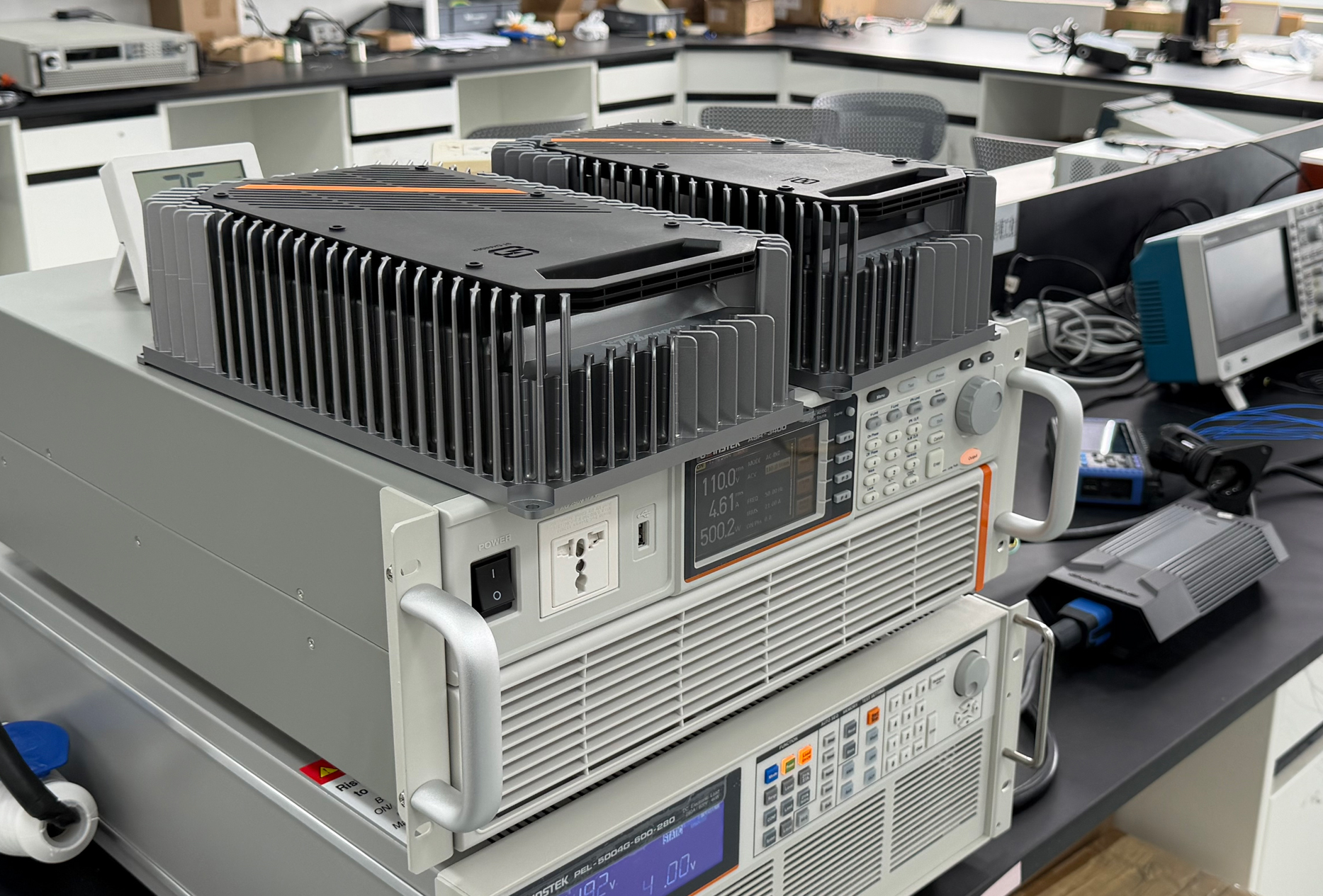
Thermal design should account for continuous output, ambient temperature, available airflow, and installation conditions. ST Charger’s charging technology provides background on its power conversion and charging control technologies. Application suitability should be confirmed through model-specific specifications and engineering tests.
Mechanical and Environmental Design
Construction equipment may encounter dust, moisture, vibration, and temperature fluctuations. Customization should account for enclosure dimensions, mounting strength, connector retention, cable routing, and environmental protection.
An IP rating addresses specified ingress conditions but does not independently establish resistance to vibration or impact. OEMs should validate the integrated design against actual operating requirements.
Prototype Validation
Before production, the charger should be tested against agreed electrical, thermal, and mechanical specifications. Validation may cover charging performance, BMS communication, protective functions, and responses to abnormal operating conditions.
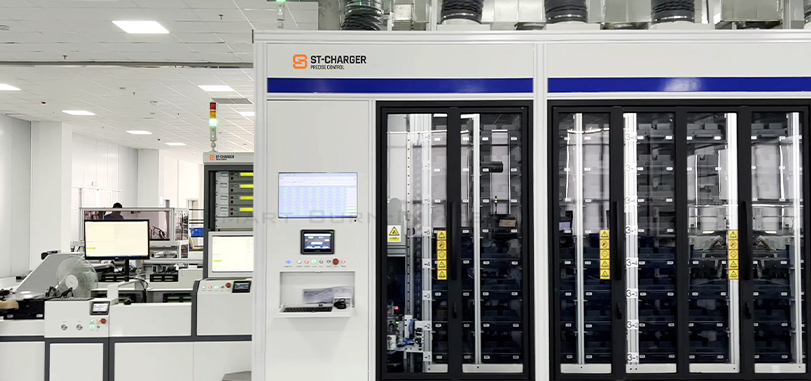
Testing the charger with the battery and machine controls helps identify compatibility issues before mass production. For projects requiring coordinated design and manufacturing, ST Charger’s OEM and ODM charging solutions provide a starting point for discussing development requirements and production arrangements.
What Technical and Cost Factors Affect Custom Charging Systems?
Charging Infrastructure
Available grid power affects achievable charging performance. OEMs should assess input supply, daily energy demand, and charging windows before determining infrastructure requirements.
Sites with limited grid access may need mobile charging equipment, battery energy storage, or generator-supported systems. The appropriate arrangement depends on operating schedules and site conditions.
Development Costs
Custom charging costs depend on power requirements, communication interfaces, cooling design, enclosure modifications, connectors, testing, and production volume. Changes to BMS protocols may also require firmware development.
OEMs should request interface documentation, continuous-output data, and thermal test results before approving the design.
Compliance Requirements
Applicable requirements depend on the target market, battery system, charger design, and complete machine. Connector specifications, electrical protection, and environmental testing should be addressed during development.
IEC 62619 addresses industrial lithium battery safety, while UL 2580 covers electric vehicle battery packs and related assemblies. Neither should be treated as a universal charger certification. OEMs should confirm the standards applicable to each component and the finished machine.
How Do Charging Solutions Affect Operating Costs?
Energy and Maintenance
Electricity costs depend on energy consumption, charging losses, and local electricity rates. OEMs should assess energy use under representative working conditions.
Maintenance requirements vary with cooling design, environmental exposure, connectors, and seals. Reliability data, warranty terms, and supplier maintenance guidance can help evaluate long-term ownership costs.
Charging Strategies for Different Sites
Indoor operations may benefit from scheduled charging when work schedules allow sufficient downtime. Urban sites may have established charging infrastructure, while remote locations may require mobile charging or energy storage.
In either setting, OEMs should verify power availability, battery compatibility, and charging interfaces before deployment.
Questions fréquemment posées
What determines custom charger power requirements?
Battery capacity, permitted charging current, target charging time, input power, and thermal constraints determine the required rating. The design must remain within the battery manufacturer’s limits.
What information is needed for custom charger development?
OEMs should provide battery specifications, BMS protocols, target power, input supply, installation dimensions, cooling conditions, environmental requirements, and target-market standards.
How long does custom charger development take?
The timeline depends on whether an existing platform can be adapted or a new design is required. OEMs should agree on specification approval, prototype testing, validation, and production milestones with the supplier.
Conclusion
Custom high-power charging requires coordinated electrical, thermal, and mechanical design. Defining battery and operating requirements early helps OEMs reduce integration risks and prepare for production.
For project-specific requirements, contact the ST Charger team to discuss your charging system needs.