


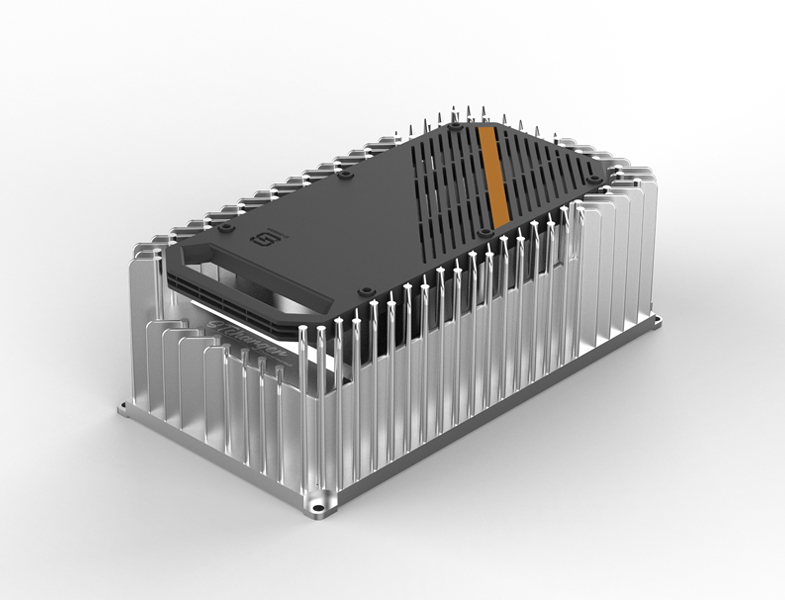
Forklifts, pallet trucks, AGVs, and other industrial machines often operate for extended periods with limited charging windows. An industrial battery charger must deliver sufficient power while maintaining conversion efficiency, thermal stability, and compatibility with the equipment. For OEMs, custom design helps balance these requirements within the complete electrical system.
Why Do Industrial Applications Require High Power Charging?
Match Output Power to Battery Requirements
Charging power depends on battery voltage, capacity, and maximum charging current. For example, a 48V 100Ah battery stores approximately 4.8kWh of nominal energy. Higher output can shorten charging time, provided the battery supports the required current.
Equipment manufacturers should consider battery specifications, operating shifts, charging schedules, and available AC input power before selecting a charger.
For vehicle integration, ST Charger’s industrial on board chargers offer a published power range of 600W to 3,000W and voltage configurations from 24V to 96V. For applications requiring a removable external unit, its portable battery charger supports 600W to 1,300W output and 36V to 72V configurations.
Support Continuous Operating Demands
Industrial equipment may operate across multiple shifts, leaving limited time for charging. The charger must maintain stable output under extended loads without excessive temperature rise.
Component ratings, ambient temperature, current limits, and cooling capacity should be evaluated under actual operating conditions.
How Can Power Conversion Improve High Power Charging Efficiency?
Reduce Switching and Conduction Losses
High power conversion generates heat through switching and conduction losses. LLC resonant conversion and synchronous rectification help reduce these losses and improve efficiency.
ST Charger’s power conversion technology includes resonant energy recirculation to recover switching energy and reduce thermal losses.
Maintain Stable Output Under High Loads
High efficiency also requires accurate voltage and current regulation. Digital control adjusts charging output according to battery requirements, while circuit protection helps manage input fluctuations and electrical stress.
Stable output is particularly important when industrial equipment operates under demanding charging schedules.
How Should Thermal Management and Electrical Integration Be Designed?
Adapt Cooling and Enclosure Structures
Higher output power increases heat generation within electronic components. Thermal design should account for component losses, ambient temperature, and available cooling space.
Depending on the application, solutions may include aluminum housings, cooling fins, forced airflow, and potting compounds. Enclosure protection should also reflect exposure to dust, moisture, and vibration.
ST Charger’s on board platform features an aluminum housing, potted structure, and IP67 protection for the specified product family.
For material handling equipment, charger placement and cooling should also suit available installation space and vehicle operating conditions.

Coordinate Charging Control With the BMS
The battery management system monitors battery conditions and controls charging limits. The charger must follow the battery’s voltage, current, and temperature requirements.
For lithium battery systems, communication between the charger and BMS helps coordinate charging parameters. Common integration requirements include:
- CAN and CANopen communication
- UART interfaces for diagnostics
- Voltage and current monitoring
- Overvoltage and overcurrent protection
- Temperature monitoring
Available interfaces should match the equipment’s electrical architecture and project requirements.
How Can OEMs Evaluate and Customize Industrial Charging Solutions?
Compare Design Requirements by Application
The appropriate charging configuration depends on operating schedules, battery limits, installation conditions, and available charging time.
| Design Factor | Main Consideration | Engineering Priority |
| Output power | Battery voltage and current limits | Charging time |
| Conversion efficiency | Switching and conduction losses | Energy use and heat |
| Thermal management | Ambient temperature and cooling space | Operating stability |
| Electrical integration | BMS and vehicle communication | System compatibility |
Customize and Validate Before Production
Different machines may require specific output ratings, charging profiles, connectors, enclosure dimensions, and communication protocols. Custom development allows these requirements to be addressed as part of the complete equipment design.
ST Charger’s custom charger design capabilities cover electrical architecture, software, mechanical structure, charging parameters, and product testing.
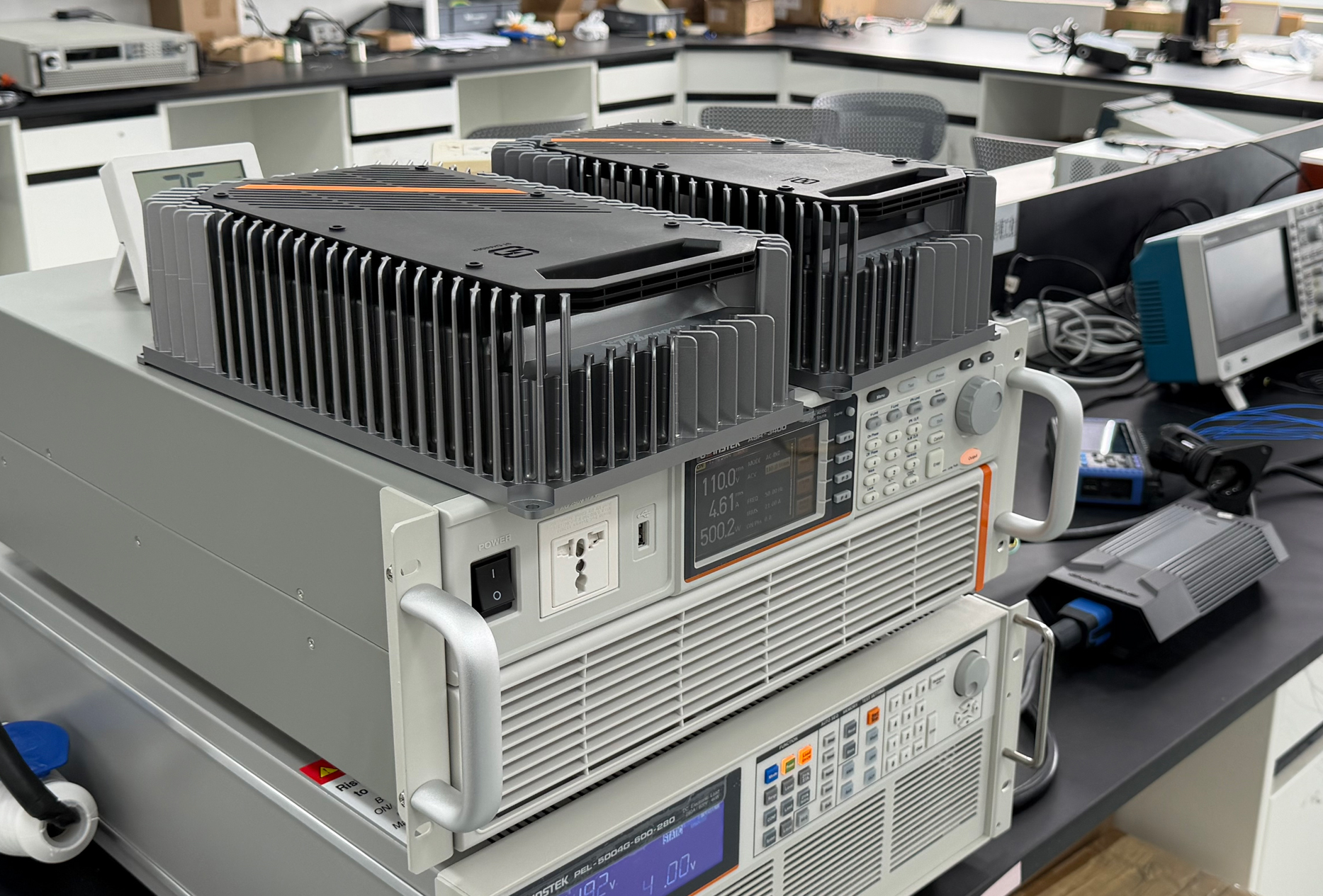
Before mass production, OEMs should validate output stability, temperature rise, charging termination, protection functions, and communication under representative operating conditions. Early testing helps identify integration issues before they affect production.
Frequently Asked Questions
What Determines the Power Rating of an Industrial Battery Charger?
The rating depends on battery voltage, capacity, maximum charging current, and available charging time. The selected output must remain within the battery manufacturer’s charging limits.
Can an Industrial Battery Charger Be Customized for Different Equipment?
Yes. Customization may include output voltage, current, charging profiles, connectors, enclosure design, cooling structures, and BMS communication.
What Should OEMs Prepare Before Developing a High Power Charger?
OEMs should define battery chemistry, voltage, capacity, charging limits, input supply, required output power, installation dimensions, cooling conditions, and communication protocols.
Conclusion
A reliable industrial battery charger must balance power output, conversion efficiency, thermal management, and equipment integration. To discuss your electrical specifications and development requirements, contact ST Charger’s engineering team for a customized charging solution.